Rolex ETA Saatler: The Ultimate Guide to Swiss‑Powered Timepieces That Redefine Accessible Luxury
The Rise of Rolex ETA Saatler: Blending Iconic Design with Swiss Precision
For decades, Rolex has been the benchmark of horological prestige, instantly recognized for its timeless aesthetics and groundbreaking in‑house calibers. Yet within the passionate watch community, a parallel universe has quietly flourished — one where the unmistakable silhouette of a Submariner, GMT‑Master, or Datejust is brought to life not by a Rolex manufacture movement, but by a Swiss ETA movement. This fascinating category is known as Rolex ETA Saatler, and it represents a sweet spot where iconic design meets the legendary reliability of ETA calibers. The term, rooted in Turkish watch enthusiast culture, translates directly to “Rolex ETA Watches” and describes high‑grade timepieces that faithfully capture the essence of Rolex models while housing a genuine Swiss ETA engine at their core.
Understanding why Rolex ETA Saatler have gained such a devoted following requires a glimpse into watchmaking history. ETA SA, a subsidiary of the Swatch Group, has for decades been the beating heart of the Swiss watch industry. Its movements — the ETA 2824‑2, ETA 2836‑2, and the ultra‑slim ETA 2892‑A2 — are renowned for their durability, accuracy, and ease of service. For years, even some luxury brands relied on ETA movements before developing their own. Rolex, however, famously moved away from third‑party calibers early on, cementing its reputation with all‑in‑house mechanisms. The allure of a Rolex ETA Saat therefore lies in the marriage of two worlds: the unmistakable, aspirational design language of a Rolex and the practically bulletproof, easily maintainable heartbeat of an ETA. For the enthusiast who values both form and long‑term dependability, this combination is simply irresistible.
The popularity of Rolex ETA Saatler has surged as manufacturing technology has advanced. Today’s top‑tier alternatives are not the crude imitations of the past; they are produced by specialized factories that utilize CNC machining, genuine 904L stainless steel, and hand‑assembled components. These watches are built with an obsessive attention to detail — the weight, the bezel action, the dial’s sunburst finish, even the micro‑engravings on the rehaut — are all painstakingly replicated. When such a meticulously crafted exterior is paired with a Swiss ETA movement that has been properly regulated and tested, the result is a timepiece that feels genuinely premium on the wrist and performs with a precision that rivals watches costing many times more. This is why Rolex ETA Saatler are not simply seen as substitutes; they are celebrated as a distinct category that offers a different, yet equally valid, proposition: the luxury of choice.
Inside the Movement: Why an ETA Caliber Makes the Difference
To truly appreciate a Rolex ETA Saat, one must look beneath the dial. The movement is the soul of any watch, and the decision to use an ETA caliber transforms the entire ownership experience. Genuine Swiss ETA movements, or their high‑grade Swiss clones assembled under strict quality control, offer a set of practical advantages that are deeply appealing to seasoned collectors and newcomers alike. The most common workhorses found in these watches are the ETA 2824‑2 and ETA 2836‑2. Both are automatic, hacking, and hand‑winding, beating at 28,800 vibrations per hour, which delivers a smooth 8 ticks per second and a characteristic sweep that closely mimics the visual fluidity of a Rolex caliber. A well‑regulated ETA 2824 can easily achieve accuracy within ±5 seconds per day, a level of performance that comfortably meets chronometer standards.
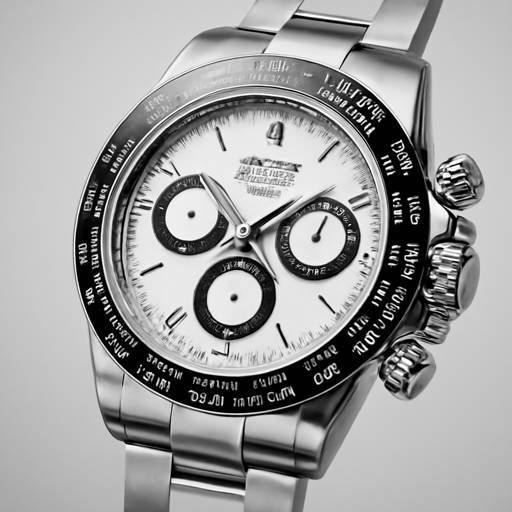
One of the most compelling arguments for the ETA‑powered route is serviceability and longevity. Rolex’s in‑house movements, while masterpieces of engineering, require factory‑trained watchmakers and proprietary parts that can make routine maintenance both expensive and slow. In contrast, an ETA movement is a universal language spoken by virtually every competent watchmaker on the planet. Parts are abundant, affordable, and readily available. Twenty years from now, servicing a Rolex ETA Saat will still be a straightforward task, whereas many modern in‑house calibers may present escalating costs and logistics. This practical longevity aligns perfectly with the philosophy of owning a watch that is meant to be worn daily, without the anxiety of a sky‑high service bill that could rival the initial cost of the timepiece.
Beyond the mechanical benefits, the ETA movement also opens the door to a vast selection of complications and configurations. While a genuine Rolex GMT‑Master II uses the calibre 3285, a high‑quality Rolex ETA Saat inspired by the same design might house a modified ETA 2836‑2 with a functional GMT module. This allows the watch to offer precisely the same functionality — an independently adjustable 24‑hour hand, a rotating bezel, and a date display — in a package that remains impressively thin and robust. For models like the Datejust, an ETA 2824 provides a simple, reliable date mechanism that perfectly mirrors the classic Rolex layout. The tactile feedback of setting the time, the audible rotor spin, and the consistent power reserve of around 38 to 42 hours all contribute to a daily wearing experience that feels reassuringly mechanical and thoroughly satisfying. It is this unshakable mechanical confidence that transforms a Rolex ETA watch from a mere design statement into a genuine tool that you can depend on.
How to Identify a High‑Quality Rolex ETA Watch: Materials, Build, and Factory Insights
Not all Rolex ETA Saatler are created equal, and discerning a truly superior piece requires an understanding of the materials, the finishing, and the source. The first checkpoint is the case material and construction. The highest‑grade examples use 904L stainless steel, the very same alloy that Rolex employs for its superior corrosion resistance and ability to achieve a brilliant, white‑gold‑like luster. When you hold a watch built from 904L steel, it feels heavier and looks noticeably more precious than the standard 316L steel used in lower‑tier products. This metallic radiance is often the first silent indicator of quality. Paired with a sapphire crystal — ideally with an anti‑reflective coating applied on the underside — the dial pops with exceptional clarity, and the glass remains virtually scratch‑free for years.
Next, the bezel, bracelet, and clasp tell the real story. A genuine ceramic bezel insert, deeply engraved markers filled with platinum or silver-toned paint, and a smooth, precise 120‑click unidirectional rotation are hallmarks of a top‑tier Rolex ETA Saat. The bracelet should feature solid links, screw‑adjusted pins, and a clasp with a secure, satisfying lock. Advanced factories such as Clean Factory and VSF Factory have become legendary within enthusiast circles precisely because they obsess over these micro‑details. Clean Factory, for instance, is celebrated for its ceramic bezel inserts that match the original shades almost perfectly, while VSF is renowned for replicating the crystal and cyclops magnification with astonishing fidelity. Then there is ARF Factory, widely regarded for producing some of the finest bracelets in the industry, and PPF Factory, which excels in slim profile models like the Nautilus and, in this context, certain Rolex dress watches. When an ETA‑powered watch emerges from one of these respected workshops, every surface, chamfer, and brushing angle is executed with a discipline that can be truly startling.
However, even the finest factory output can vary from one unit to the next, which is why pre‑shipment quality control is non‑negotiable. A watch with a perfectly aligned rehaut, a flawless date wheel, and a movement that has been mechanically tested for accuracy and power reserve will always deliver a vastly superior experience. That’s why many collectors turn to a dedicated platform for Rolex ETA Saatler where every watch is subjected to rigorous inspection before shipment. Sophisticated sellers verify the tolerances of the 904L steel case, the integrity of the sapphire crystal, and the timing performance of the Swiss movement on professional testing machines. They check the waterproofing seals, the bezel alignment, and the lume brightness, ensuring that what arrives on your wrist is not just a visually accurate homage, but a fully functional, high‑precision instrument. In a segment where nuance is everything, such meticulous curation is what separates a momentary thrill from a timepiece that will remain a staple in your rotation for a lifetime.

Ibadan folklore archivist now broadcasting from Edinburgh castle shadow. Jabari juxtaposes West African epic narratives with VR storytelling, whisky cask science, and productivity tips from ancient griots. He hosts open-mic nights where myths meet math.