Sconce Lighting That Elevates Every Space: Style, Craft, and Practical Brilliance
What a Sconce Does for Your Home or Business
A sconce is more than a wall-mounted light; it’s a strategic design tool that shapes atmosphere, guides movement, and punctuates architecture. Unlike ceiling fixtures that wash a room in uniform brightness, a wall light draws the eye along surfaces, casting soft pools and directional beams that add depth. Whether flanking a mirror, marking a corridor, framing an entryway, or spotlighting art, a well-placed wall fixture turns negative space into a moment of interest. The right piece can bridge decor styles too—an industrial shade with warm metal tones suits modern lofts, while a classic dome or gooseneck pairs beautifully with farmhouse and coastal homes.
Form should follow function with wall lighting. Ambient illumination fills a space with welcoming, low-glare brightness; task lighting focuses on activities like reading or grooming; accent lighting highlights textures and architectural details. A thoughtfully chosen sconce can accomplish any of these jobs while still acting as a design statement. Materials matter here. Heavy-gauge steel shades, hand-spun and welded, offer durability and crisp silhouettes that resist dating out of style. Durable, powder-coated finishes stand up to changing weather on porches and patios, yet look equally refined in a living room or hallway.
Local environments influence the best choice. In coastal towns, salt air demands rugged finishes and tight construction; in high-desert climates, UV-stable coatings keep color true; in mountain regions, sturdy backplates and sealed seams help lights endure freeze–thaw cycles. Indoors, the right wall fixture can bring warmth to open-plan spaces by creating intimate nooks along the perimeter. In hospitality settings, wall lighting sets the tone as much as the music or menu. A row of warm, downward-facing shades in a café, for example, can define seating zones and support brand mood without adding visual clutter. Supporting craftspeople who build lights the old-fashioned way also means longevity—fewer replacements, stable color, and finishes that patina gracefully instead of peeling or corroding.
Choosing the Right Sconce: Size, Placement, and Light Quality
Scale is the first decision. The fixture’s diameter and projection should feel proportional to the surface it occupies. On a narrow corridor, a compact shade with minimal projection prevents crowding; over a generous facade or barn door, a larger shade and longer arm balance the mass. For doorways and porches, a rule of thumb is to choose a fixture that measures roughly one-quarter to one-third the door height—big enough to read from the street, restrained enough to keep the architecture in focus.
Mounting height shapes comfort and glare. In hallways and living areas, 60–66 inches from the floor to the center of the junction box suits most eye levels. Beside a vanity mirror, aim to center shades around 65–70 inches so light lands evenly on the face from both sides, minimizing shadows. For exterior entries, 66–72 inches typically feels natural; pair fixtures at equal heights for symmetry. In tight passages used by the public, mind clearance: models with low projection help meet accessibility goals, keeping walkways comfortable and unobstructed.
Light quality completes the picture. For warm, inviting spaces, 2700K–3000K bulbs deliver a golden tone that flatters skin and materials; for work zones and utility areas, 3000K–3500K adds clarity. Lumens depend on intent: ambient support may call for 300–500 lumens per fixture, while task-driven spots benefit from 600–800. Dimmable LED lamps broaden possibilities, letting a single wall light transition from bright utility to evening mood. Shade design affects output too. Deep, downward shades concentrate beams for signage, artwork, and tabletops; broader, shallower shades spill light gently for general glow. If ornaments or glass diffusers are involved, frosted options help soften contrast and reduce hotspots.
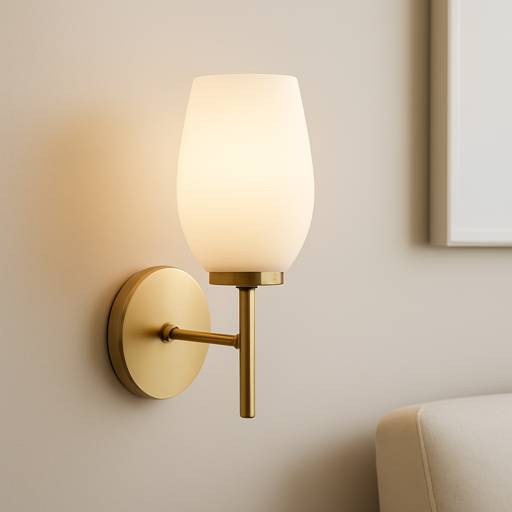
Look at construction details that preserve performance. A robust backplate sits flush and covers the junction box cleanly. Precision bends and solid welds resist rattle and misalignment. Exterior models should carry damp- or wet-location ratings appropriate to exposure. If your region faces wind-driven rain or ocean spray, consider sealed seams and finishes proven to resist corrosion. Indoors, quality powder coats hold color longer than simple paint and are easier to clean—ideal in kitchens and cafés where grease and fingerprints collect. The right wall lighting also considers maintenance: standard bulb bases (E26, E12) ensure easy lamp changes; accessible shade screws make cleaning and service simple. When in doubt, wire to a wall dimmer so brightness can flex with seasons, activities, and time of day.
Real-World Scenarios and Design Wins with Sconce Lighting
Front porch hospitality begins at the threshold. Picture a pair of powder-coated steel shades framing a craftsman door. During the day, their silhouette anchors the facade like hardware jewelry; at night, warm downward light cushions the entry, bright enough for keys and packages without glare that spills across neighbors’ yards. In rainy regions, a wet-rated fixture with a tight, domed shade helps shed water and protects lamping. On coastal streets, galvanized or marine-friendly finishes combat salt and fog. Small upgrades—like compatible dimming—allow homeowners to tune brightness for late-night arrivals or festive gatherings.
For bathrooms and dressing rooms, symmetry and soft light are everything. Two wall fixtures flanking a mirror provide even illumination that reduces shadows under eyes and chin. Choose shades that sit close to the wall to save space, with frost or opal elements if the bulb is visible. If the vanity features darker surfaces, a slightly higher lumen output preserves color accuracy during grooming. A matte or textured finish on the fixture can echo hardware and faucet tones, tying together a considered palette. In historic homes, a classic dome shade retains period charm while the interior reflects light forward for clarity—proof that good engineering supports both authenticity and function.
In cafés and boutiques, wall lighting shapes a brand story without overhauling architecture. A row of industrial-inspired shades can draw sightlines down a long corridor, guiding guests naturally from entrance to counter. When paired with overhead pendants, wall fixtures balance brightness and reduce harsh contrast over seating. Thoughtful placement beside signage or menu boards improves readability, while warmer lamps encourage guests to linger. For operators who refresh color schemes seasonally, durable finishes and replaceable shades preserve investment as layouts evolve. The same approach works in salons, galleries, and tasting rooms—spaces where comfort and clarity must coexist.
Renovations and restorations benefit from fixtures that marry old-world craft with modern reliability. In a brick bungalow, sturdy steel shades with visible fasteners feel authentic next to original masonry. On a working barn or workshop, long-armed gooseneck lights cast broad, efficient beams across doors and drive paths, improving safety without adding floodlight glare. For mountain cabins, a darker finish can disappear into timber by day and reveal a warm halo by night. Across the country—from breezy coasts to arid plains—handmade, heavy-duty construction stands up to travel, installation, weather, and time.
Installation best practices protect both beauty and function. Mount to a solid, code-compliant junction box, use exterior-grade gaskets where exposure exists, and partner with a licensed electrician when circuits or locations are complex. Maintain easily: wipe powder-coated surfaces with a soft cloth and mild soap; avoid harsh abrasives that dull finishes. Replace lamps in pairs on symmetrical layouts to keep color and brightness matched. Over years, these small habits preserve the crisp lines, faithful color, and dependable illumination that make a sconce such a smart, enduring choice for homes and businesses alike.

Ibadan folklore archivist now broadcasting from Edinburgh castle shadow. Jabari juxtaposes West African epic narratives with VR storytelling, whisky cask science, and productivity tips from ancient griots. He hosts open-mic nights where myths meet math.